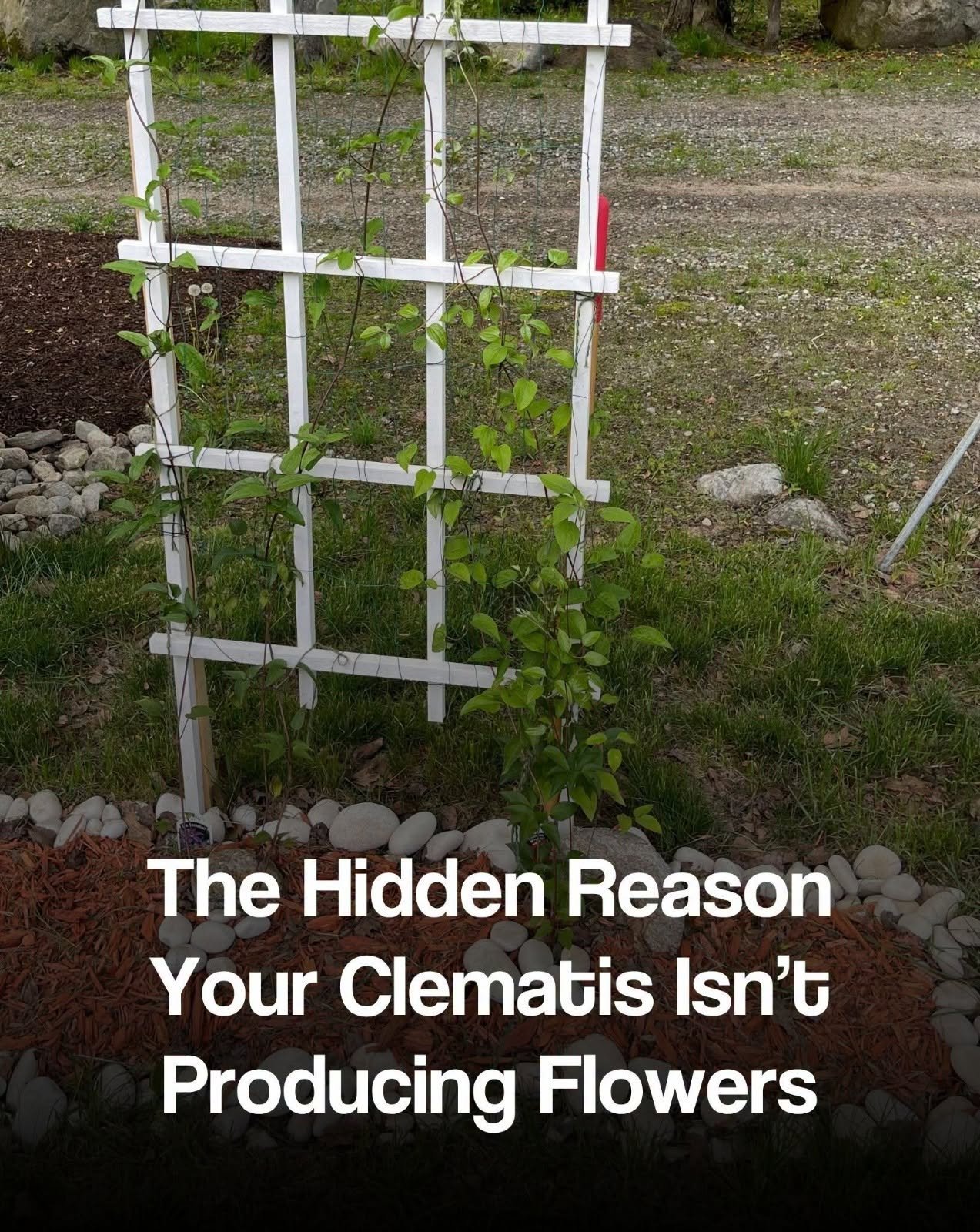
As clematis mature, they can become congested, with too many stems competing for light and nutrients. This overcrowding reduces air circulation and light penetration, resulting in fewer flowers and increased disease risk.
Thin out congested plants by removing some of the weaker stems entirely at the base. This rejuvenation allows remaining stems to receive more light and air. Most clematis benefit from this type of maintenance every few years once they’re well-established.
15. Wrong Variety For Location
Wrong Variety For Location
AD
Not all clematis are suited for all growing conditions. Choosing a variety that’s poorly adapted to your climate or site conditions sets you up for flowering disappointment from the start.
Research varieties that perform well in your specific growing zone before purchasing. Early-flowering types may struggle in northern regions with late frosts, while some large-flowered hybrids may fail in very hot, humid climates. Local botanical gardens and clematis societies can provide regional recommendations.
16. Incorrect Winter Protection
Incorrect Winter Protection
Many gardeners either over-protect or under-protect their clematis during winter. Too much protection can cause premature growth during winter warm spells, while too little can result in die-back of flowering wood.
Most clematis benefit from 2-3 inches of mulch over their root zone in winter. In harsh climates, Group 1 and 2 types may need their stems wrapped or protected if they’re to flower well the following year. Remove winter protection gradually as spring temperatures stabilize.
For Complete Cooking STEPS Please Head On Over To Next Page Or Open button (>)